Oredev Conference 2026 Part2
This is Part 2 of a 2 part series where I share my highlights from some of the talks I attended at the 2026 Øredev Developers conference.
The Signals We Keep: When Your Delivery System Stops Making Sense
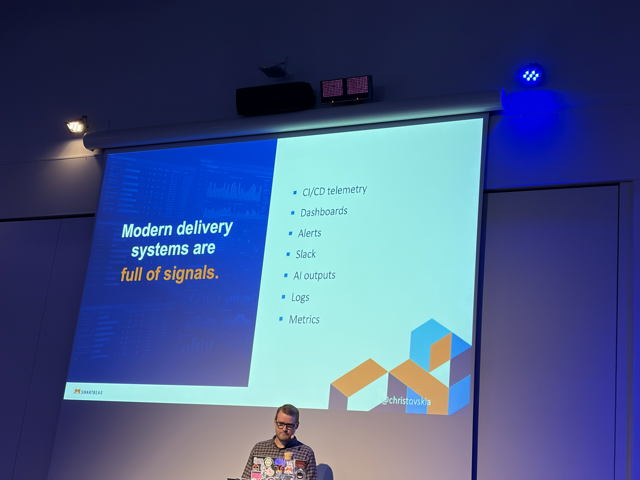
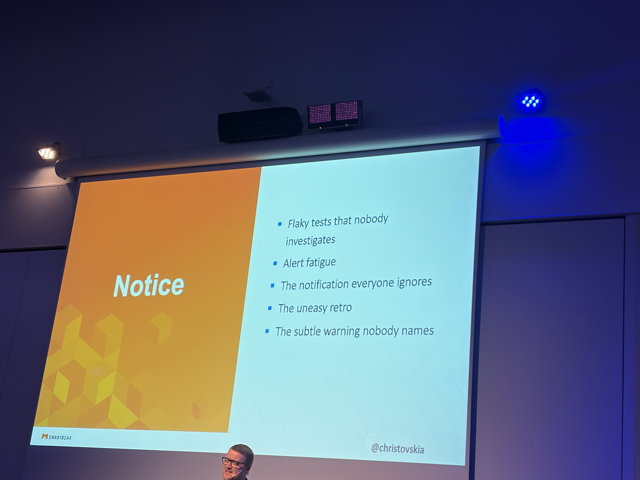
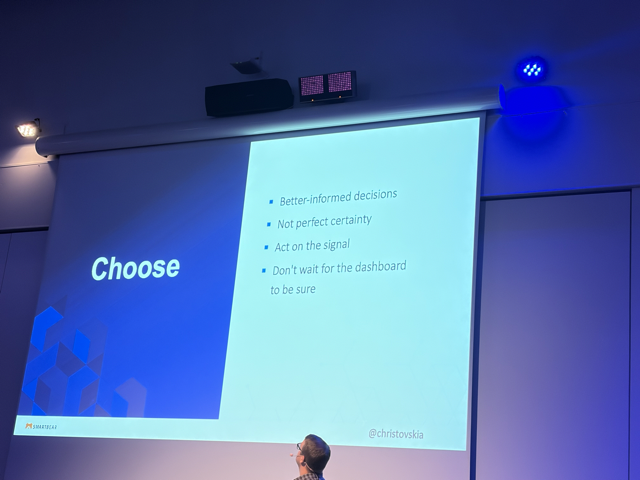
Chris Armstrong talked about the importance of having meaningful signals that actually help us make informed decisions. He shared that often at work, there is an emphasis on creating signals, but not giving ourselves enough time to interpret them. With all the noise at work, it has resulted in us ignoring signals. You may still go ahead if you get a red, and if you get a green, you may still feel concerned and/or uneasy.
Armstrong stated that we should not conflate our ability to observe something with our ability to understgand something. Visibility does not equal comprehension.
The Signal Flow that Armstrong shared was: Signal –> Interpretation –> Decision.
The Behaviour pattern that Armstrong encouraged us to use when it came to signals was: Notice –> Interpret –> Choose.
Armstrong encouraged us to ask ourselves:
- Which signals do we trust?
- What feels green but unsafe?
- What are we optimising away?
Cutting Edge or Cutting Corners? Let’s Bring Ethics to the Table
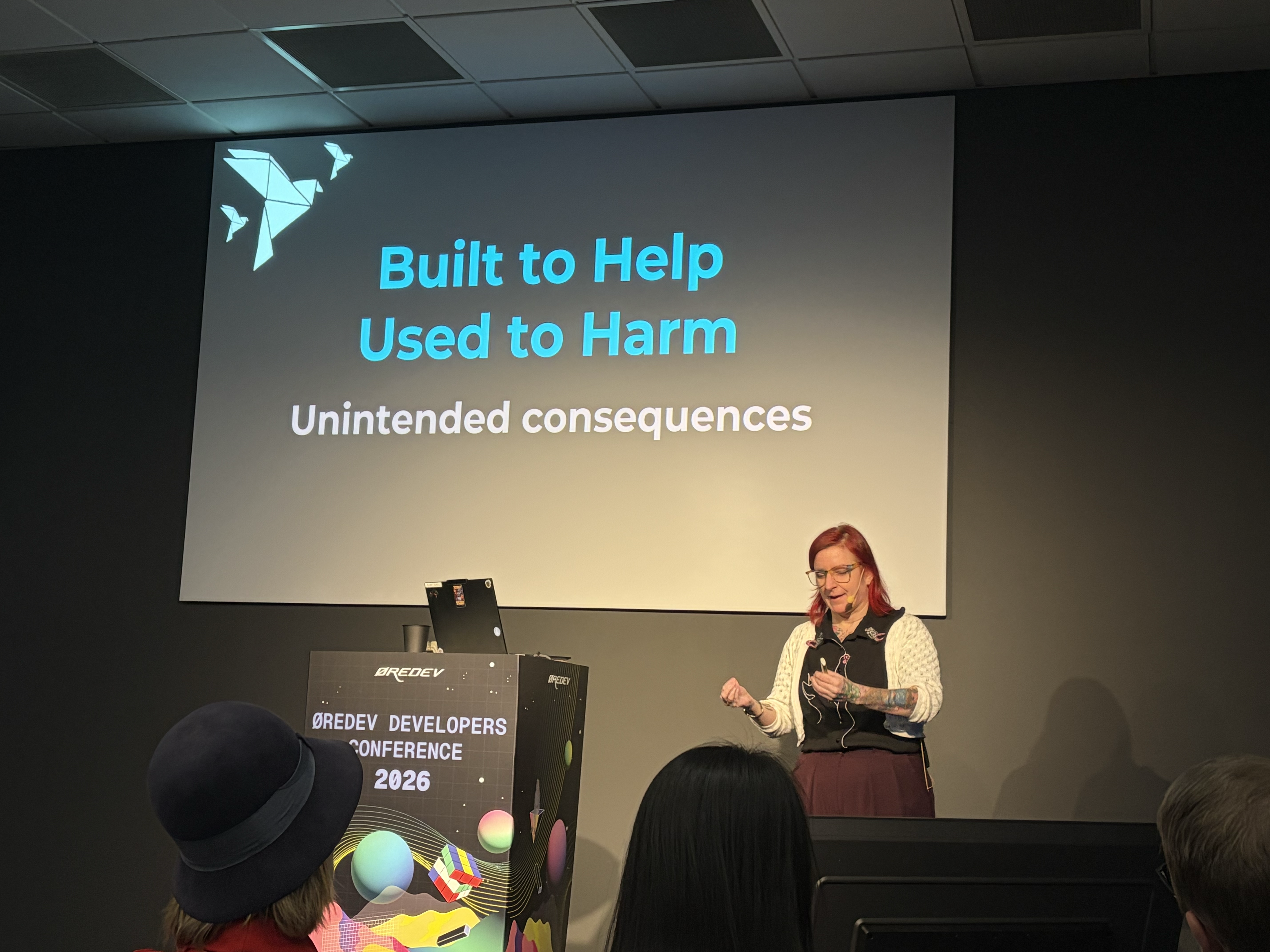
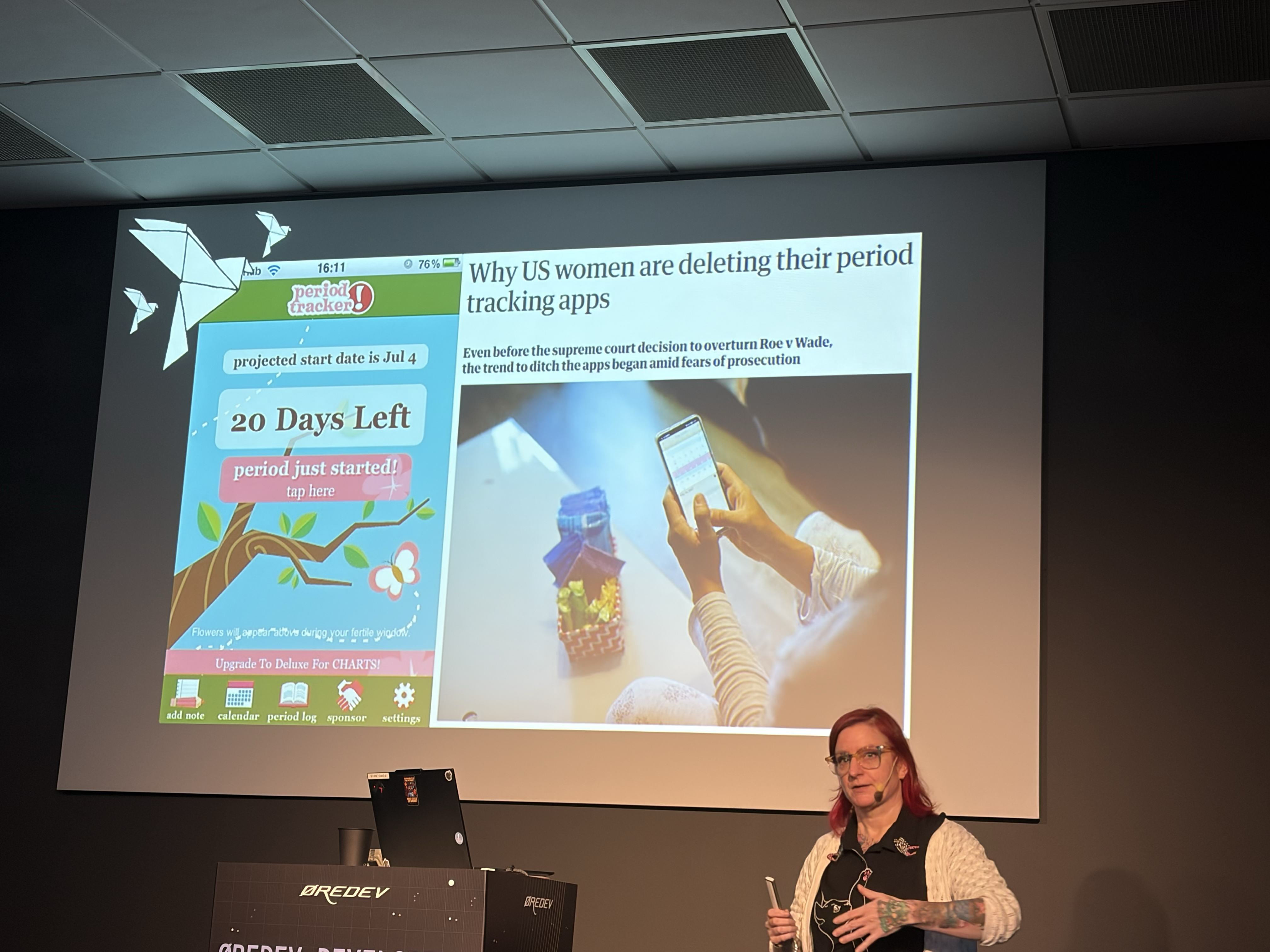
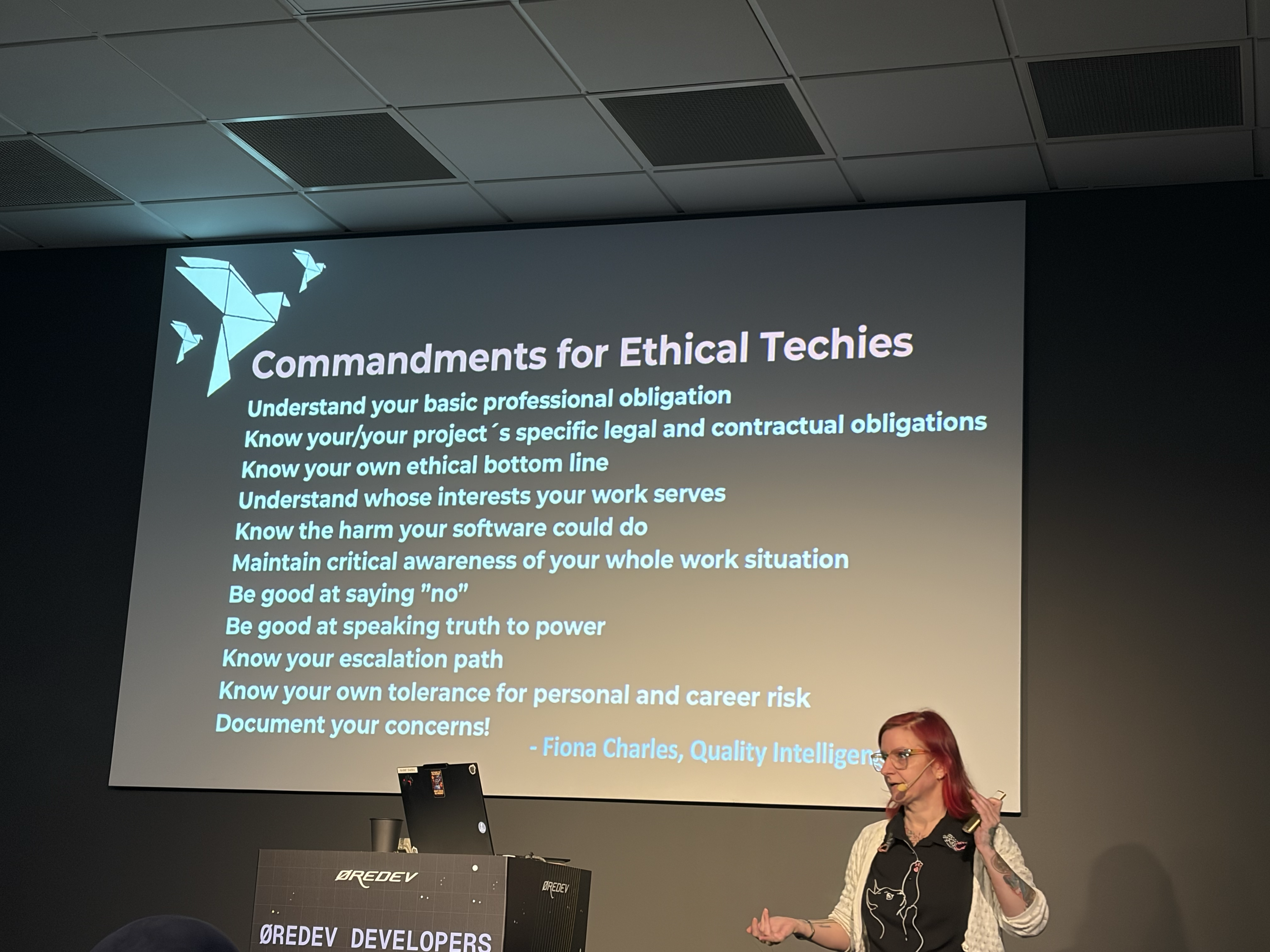
Lena Nyström shared examples of how ethics can shape the outcomes of software development projects. Even if people silent disagree with something, they may not speak up, then others suffer. Or maybe people initially put in energy into raising a concern, but then later gave up when they were told to drop it?
Nyström also posed questions to the audience, where we were asked to consider what we would do in various scenarios.
Information Design, KPIs, and the AI-Amplification of Misinterpretation
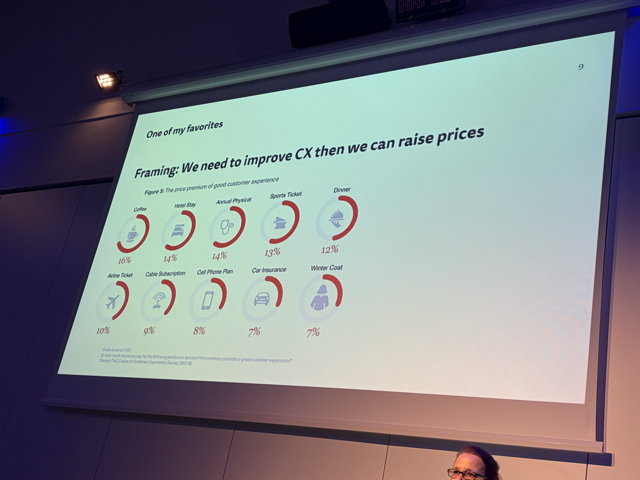
Susanne Schmidt-Rauch shared how people can use data in a confusing, misleading manner. Schmidt-Rauch addressed the importance of having human-centered information design.
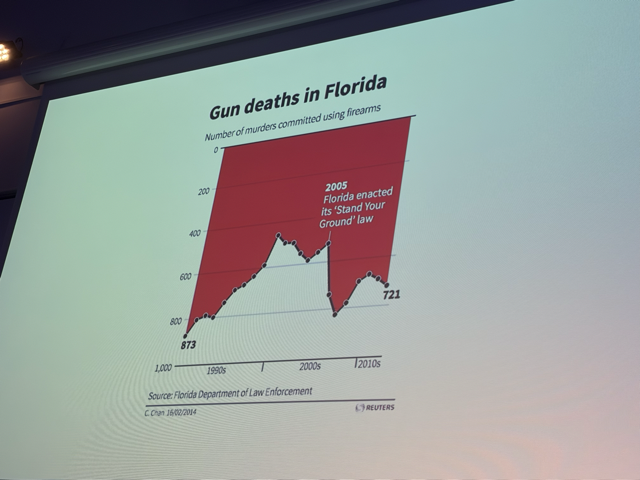
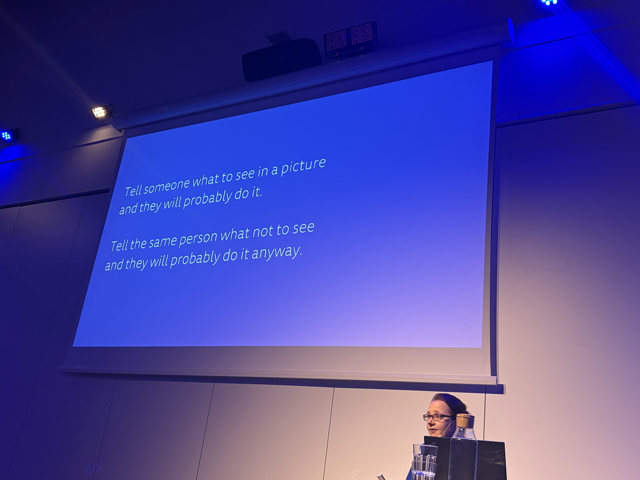
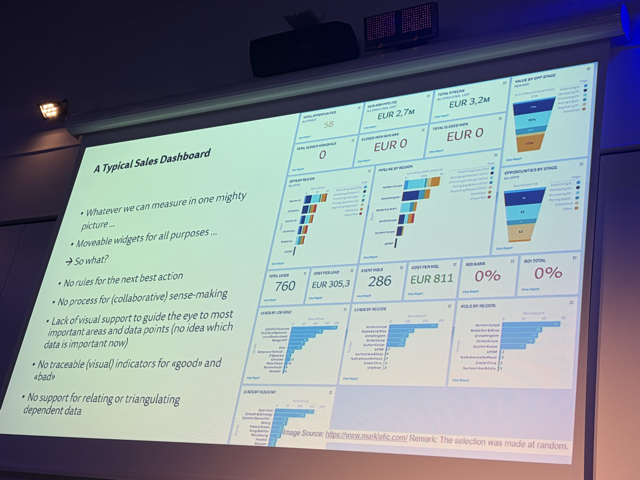
Schmidt-Rauch shared examples of confusing dashboards, misleading graphs and some things to be aware of to make sure information is communicated in an effective manner.
To create superior visualisations, Schmidt-Rauch says there should be:
- Early focus on the users
- Empirical procedures
- Iteration
Here are some ways people can mislead and confuse others when sharing information:
- Shortening the axes
- Dual y-xis
- Inverted Axis
- Value as area/volume
- Incorrefct causal inferences
- Invalid data
- Cherry picking data
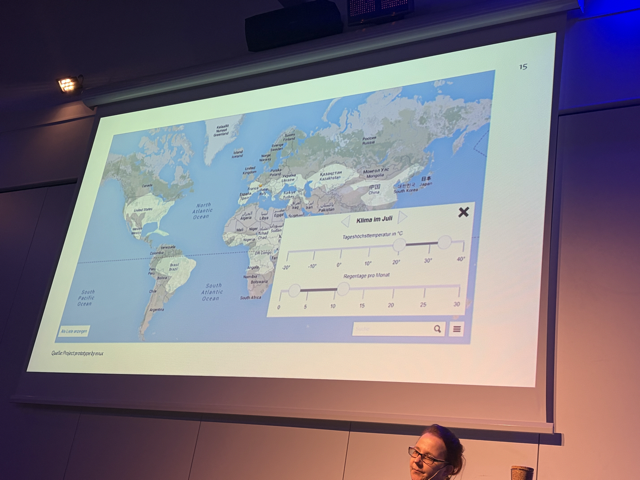
I particularly enjoyed her story on helping a travel agency, where people wanted to book trips to countries that are nice and warm, but not too warm (see visualisation on a map below).
(These are also the three principles of human-centered design.)
Building our Legacy – One Decision at a Time
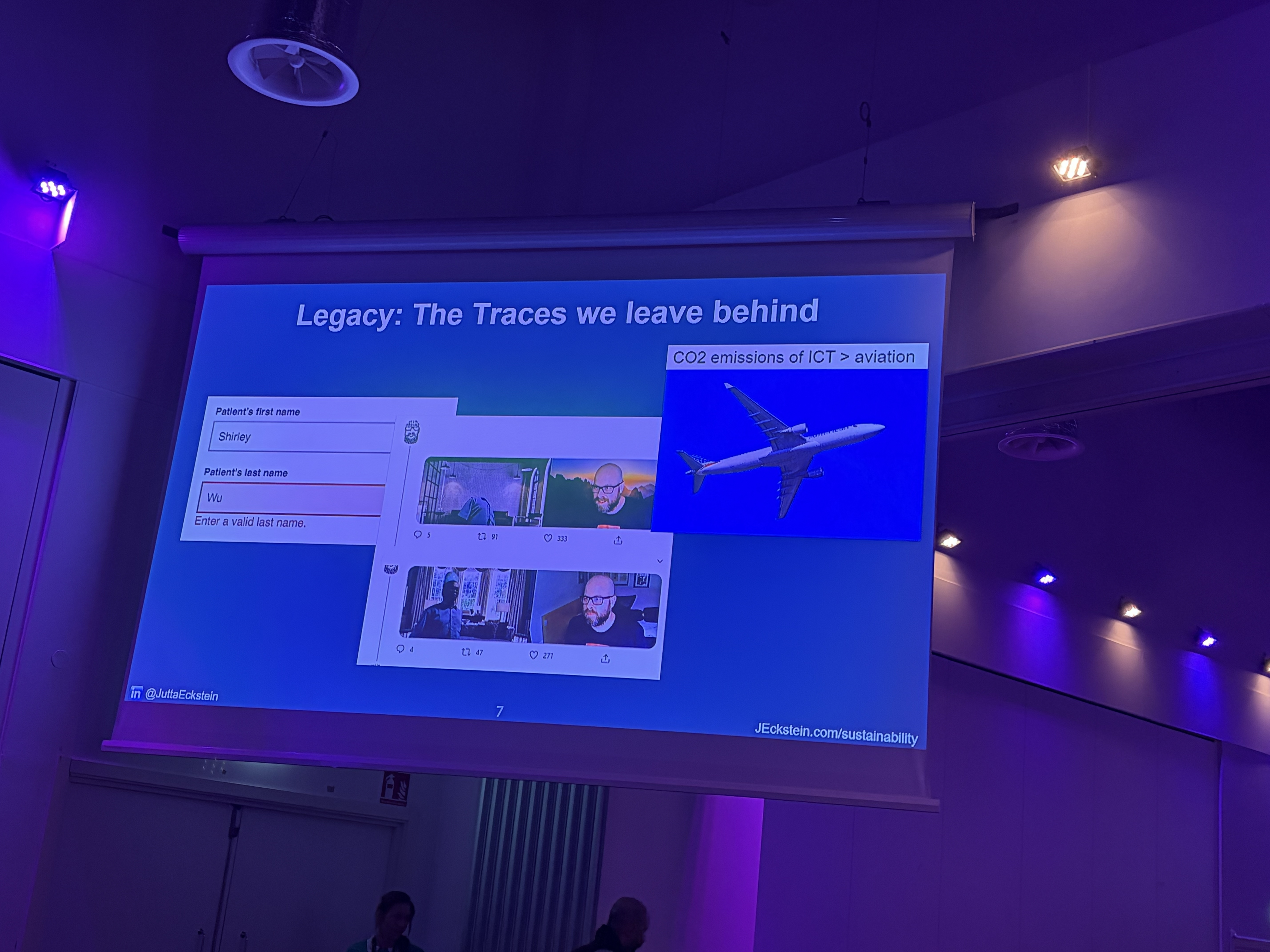
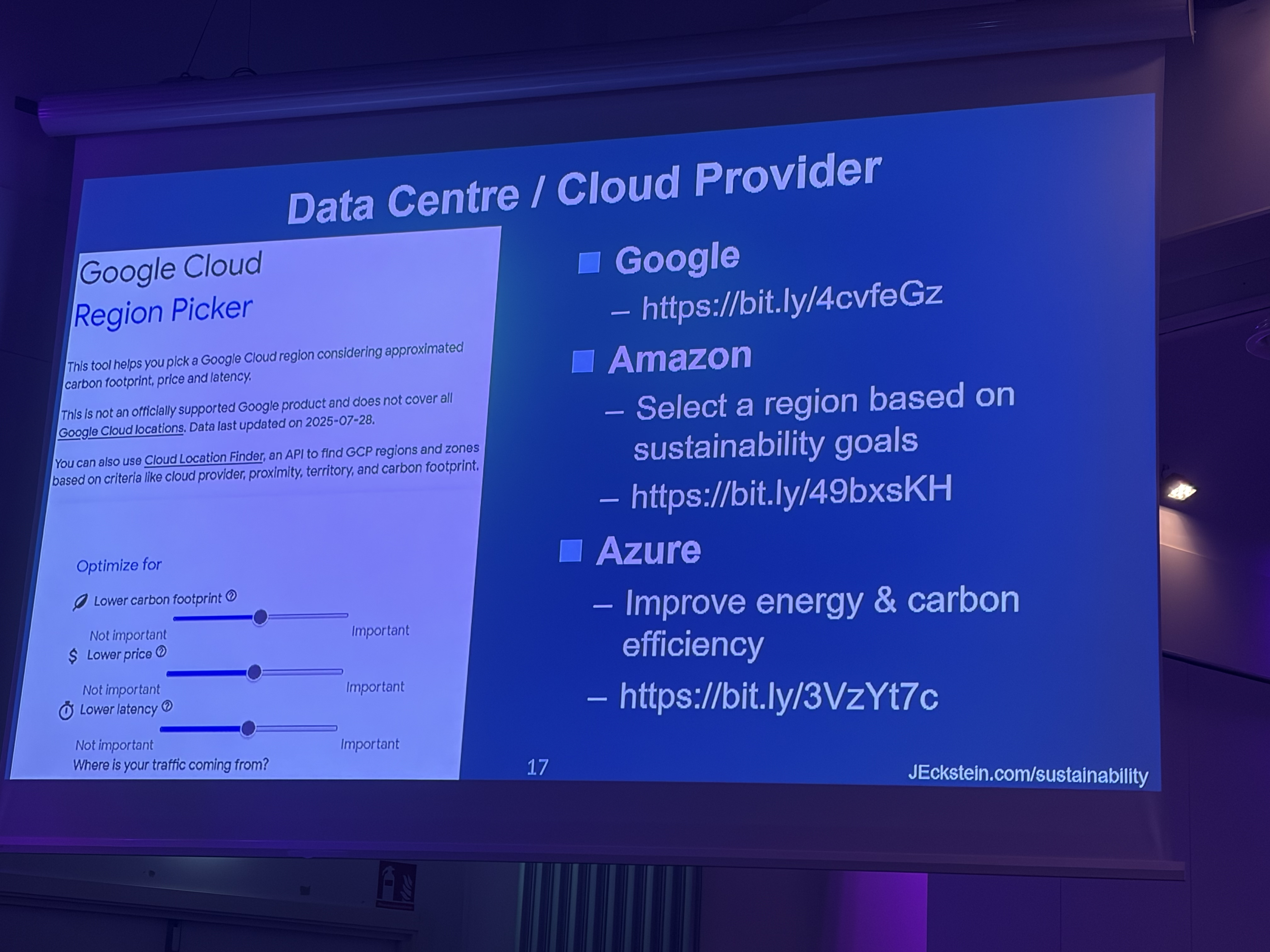
Jutta Eckstein talked about legacy in the sense of making sure what we leave behind is usable and sustainable.
Legacy systems become heritage and we want to make sure that they are:
- usable
- suitable
- feasible
- sustainble
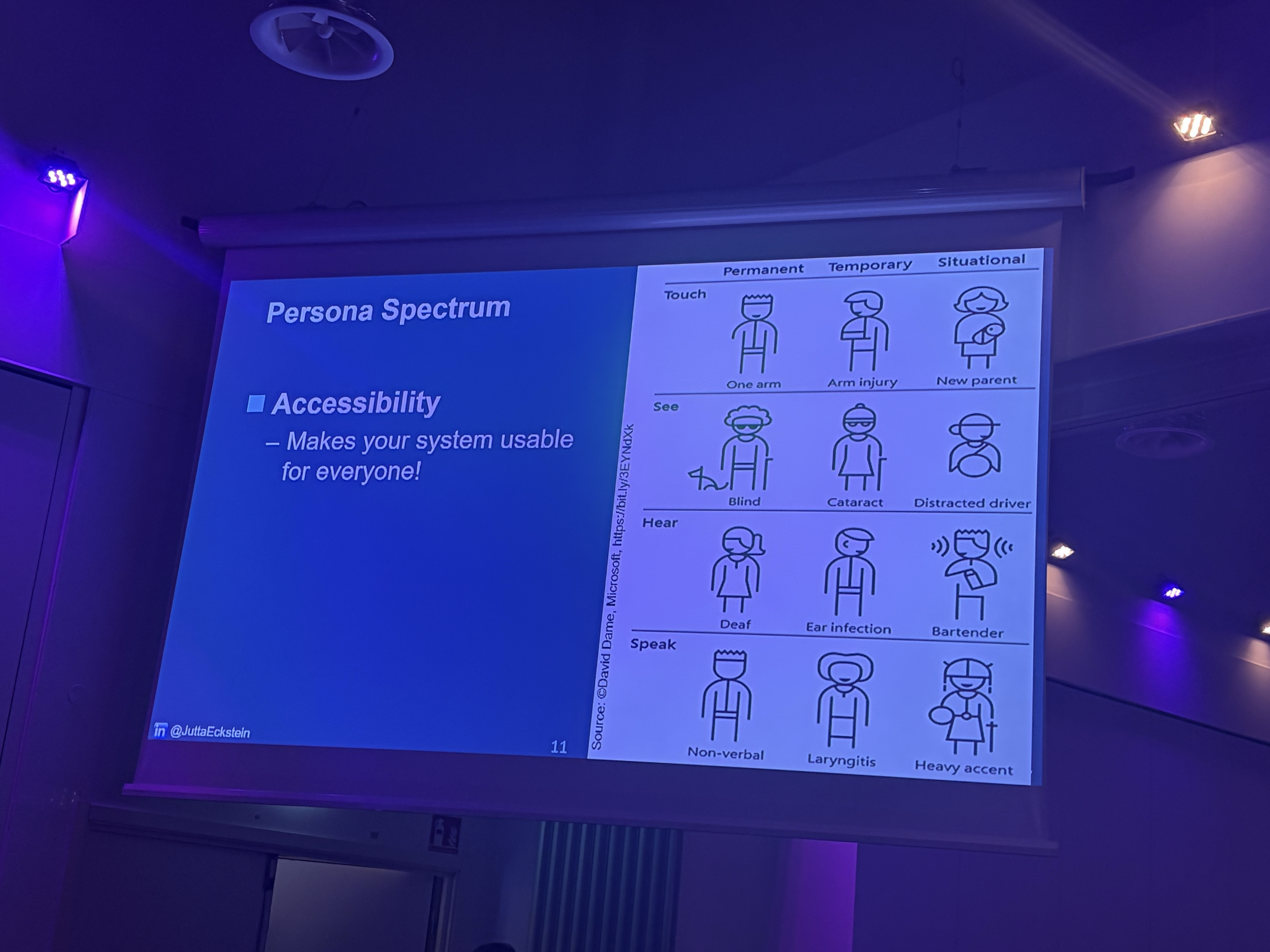
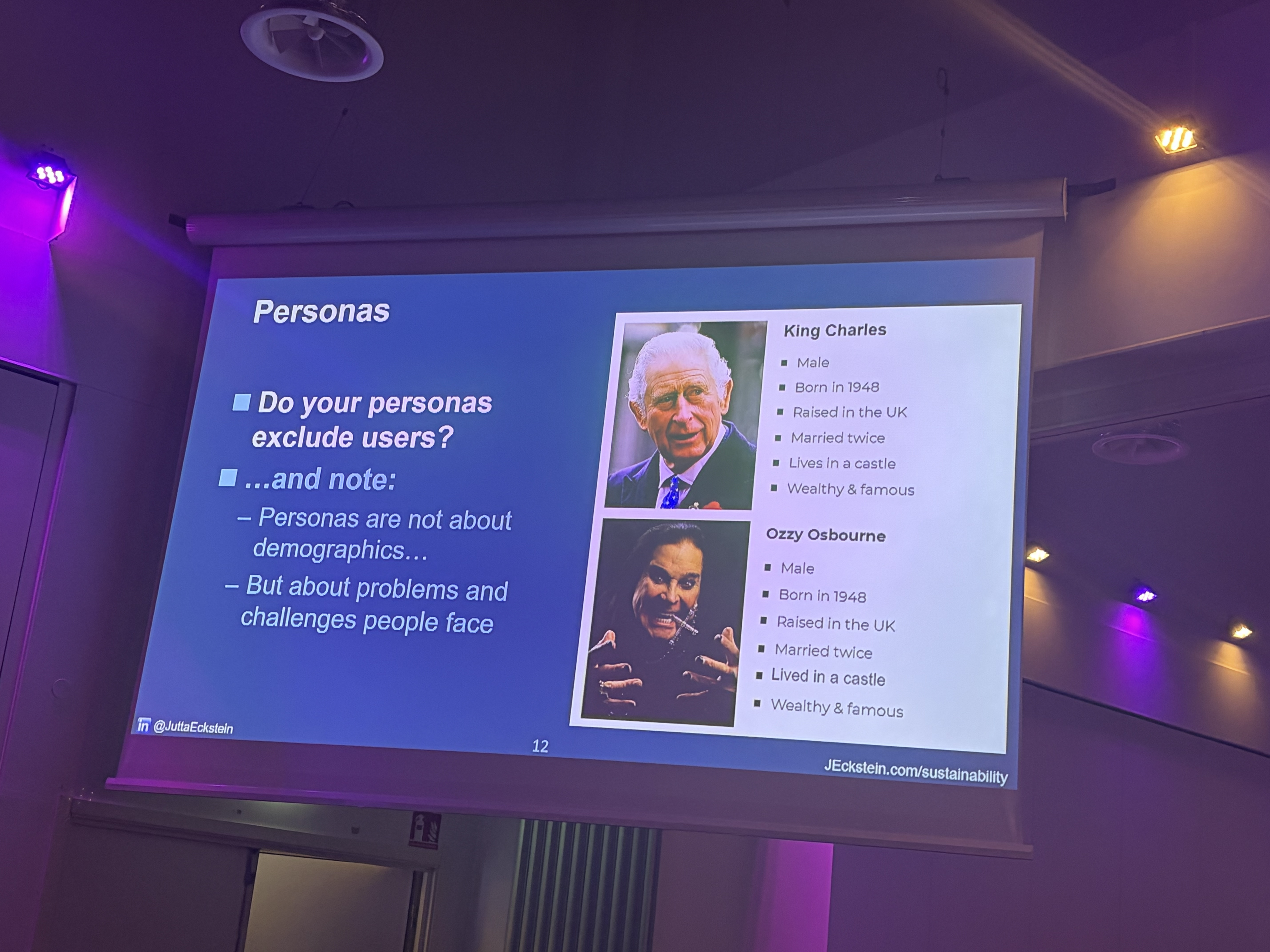
(As we do so, we want to constantly pay attention to what the customer wants and needs.)
One thing she said that stood out to me was regarding Sustainable Development.
“Sustainable development is development that meets the needs of the present without compromising the ability of future generations to meet their own needs.”
Eckstein highlighted the need to:
- Focus on value
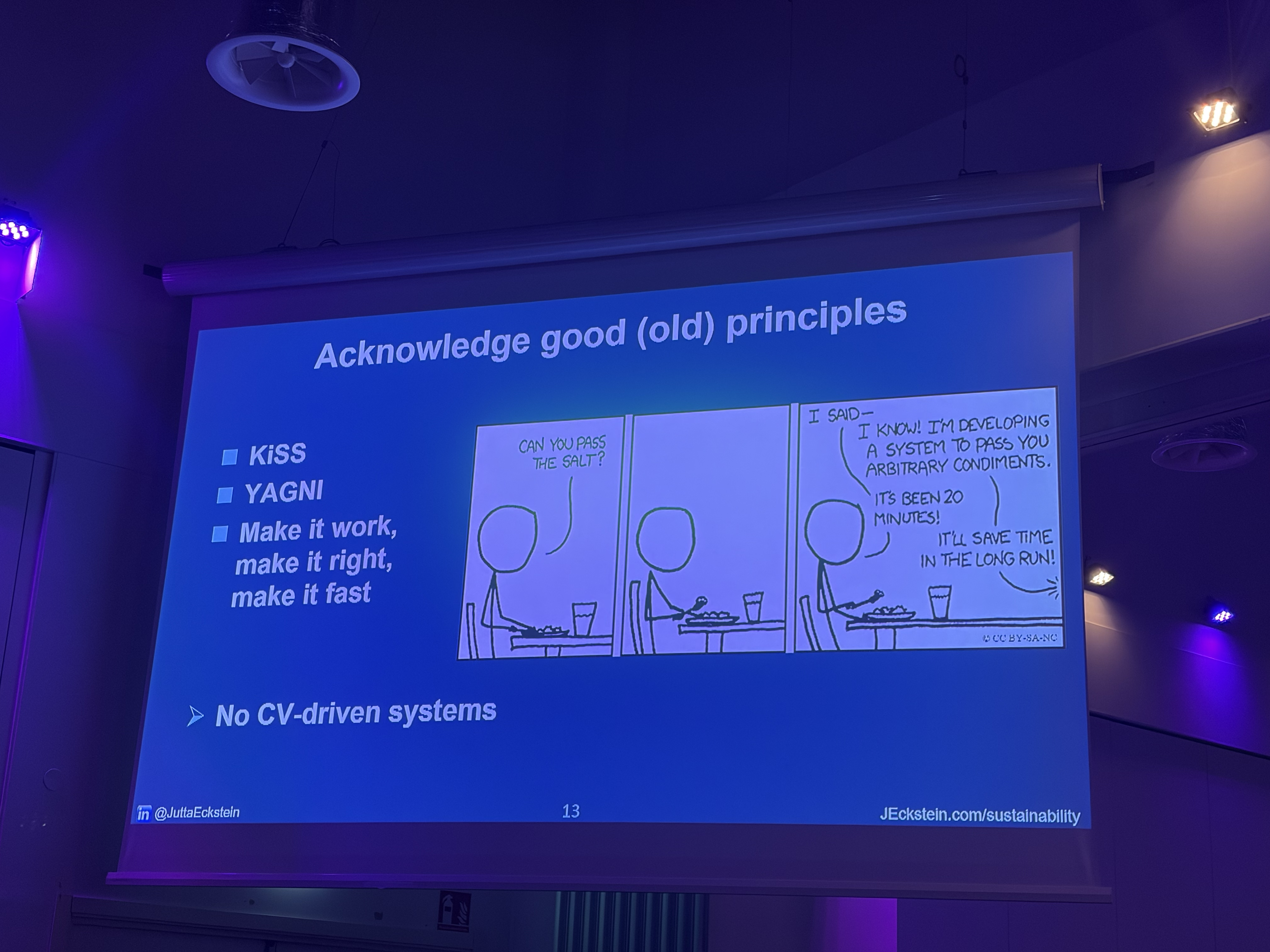
- Avoid feature creep
- Eliminate unused features.
Not your code, still your problem: Building confidence with tools you don’t trust
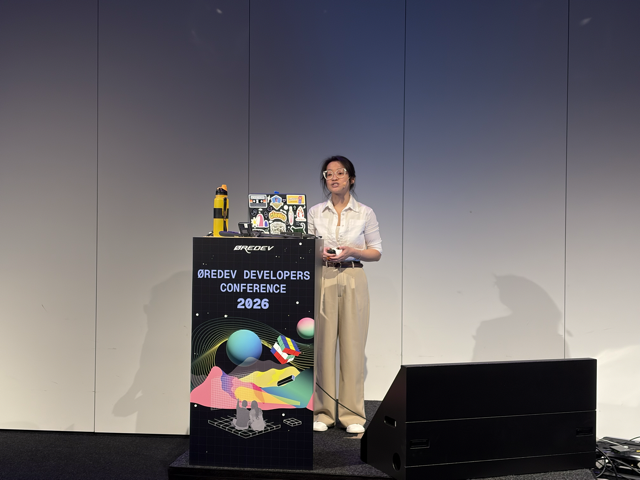
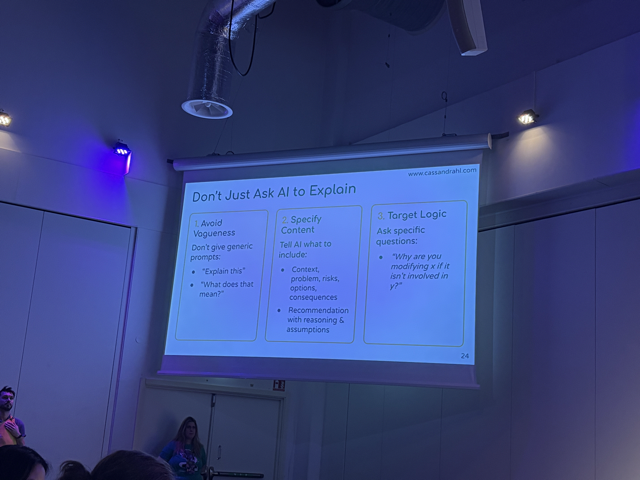
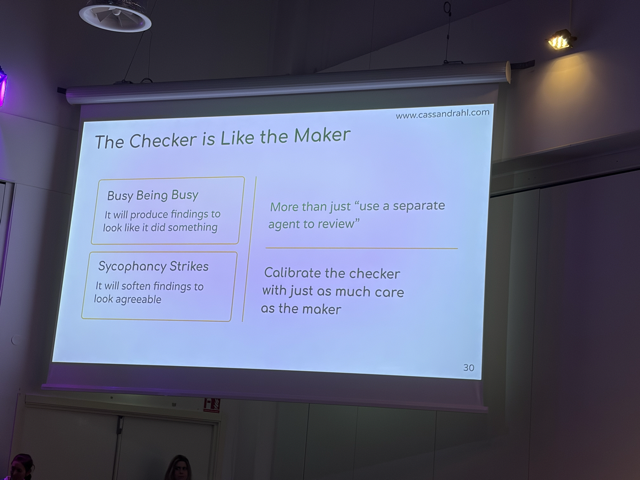
Cassandra Leung shared some principles and guidelines in using Ai when testing software, to help you work in an effective and responsible way.
She talked about putting your name behind something, to show you stand behind what it produces (along with some real-life examples of both something someone stood behind, and another example of an app she did not publish, because she was not willing to put her name behind it).
A particularly awesome thing Leung shared in her presentation was shared multiple examples of detailed, clear prompts she writes, when using LLMs, to encourage the output to be useful. She then broke down why exactly she worded the prompts the way she did, what exactly was she after for each phrase, and what was she trying to avoid.
AI is not the best at balance, it needs help to find the middle (After feedback, AI can overcorrect).
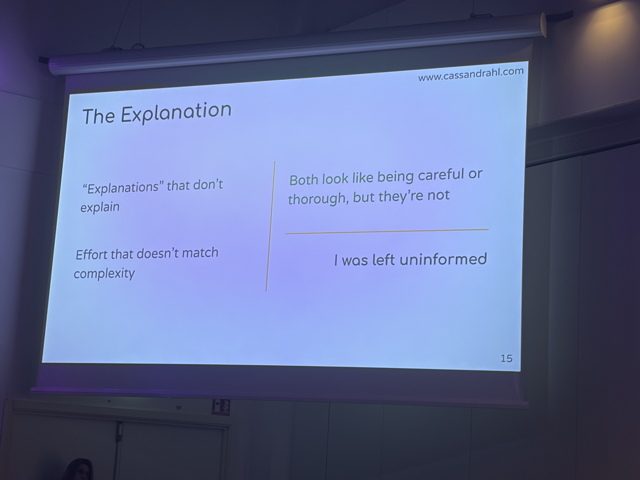
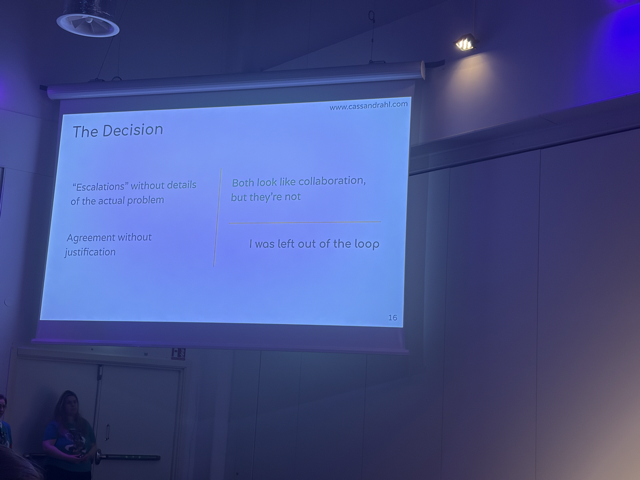
Leung also encouraged us to pay attention to the decision boundary and watch out for the silent assumptions/decisions that LLMs make/take on your behalf. Call them out.
She shared that it’s uncomfortable to admit you don’t know, it feels like you are admitting you are underqualified.
“Confusion is a signal to dig, not a self-assessment.”
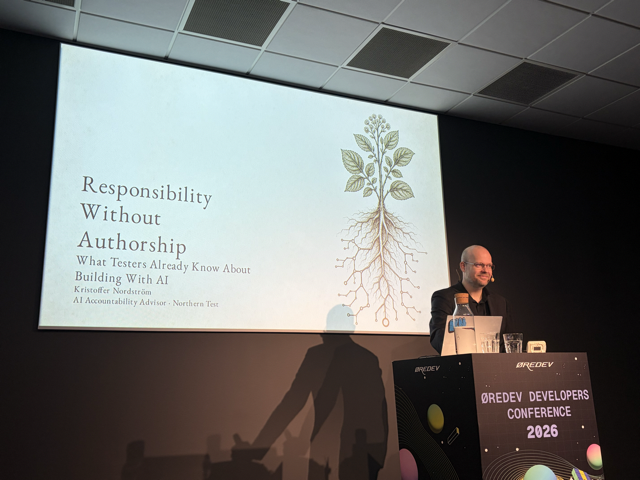
Responsibility Without Authorship: What Testers Already Know About Building With AI
Kristoffer Nordström shares his experiences in using AI, when he has dug deeper and how he thinks testers are uniquely positioned to work with AI in this evolving landscape.
Nordström has a PKB (Personal Knowledge Base) where he organises information about people he knows etc. Testers are already the human PKB in development teams.
there used to be a prohibitive cost for wild ideas that came out of nowhere - now the barrier has been significantly lowered. Making new ideas a reality is lot easier now, than before.
“When contruction becomes cheap, judgement is of high value.”
Just because it’s cheap and fast to build something, doesn’t mean we should build it.
We need to get better at asking ourselves (regarding new features), do we really need this?
Another thing to watch out for, when using AI, is its lack of hedging.
Testers watch out for signs/tells that someone is hedging their answer, they look out for phrases such as:
- Probably
- Should
- Assume
- Think
But AI does not do this. LLMs sound very confident every single time. (hallucination or not).
We need to learn to treat human and AI colleagues differently